The problem: three worlds that don't talk to each other
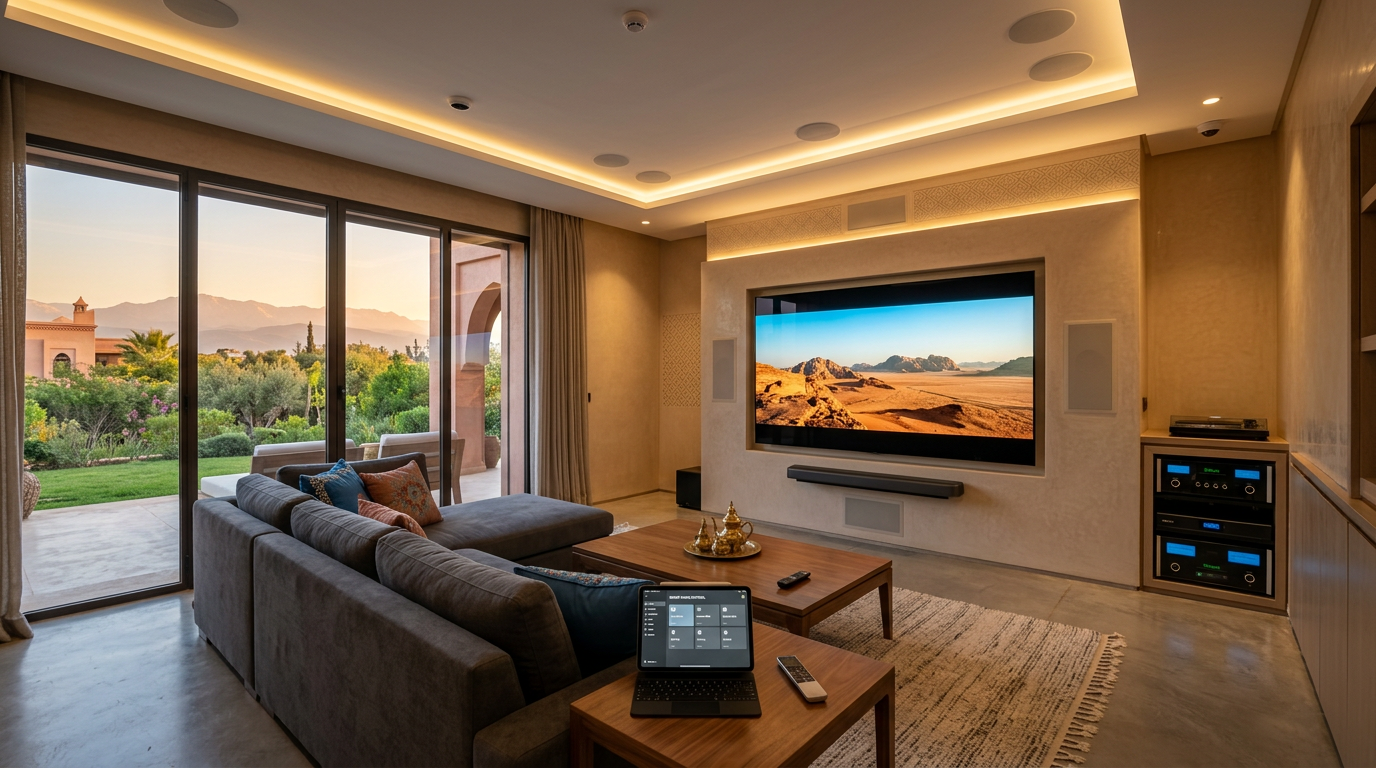
In a high-end villa in Morocco, you generally find three independent systems:
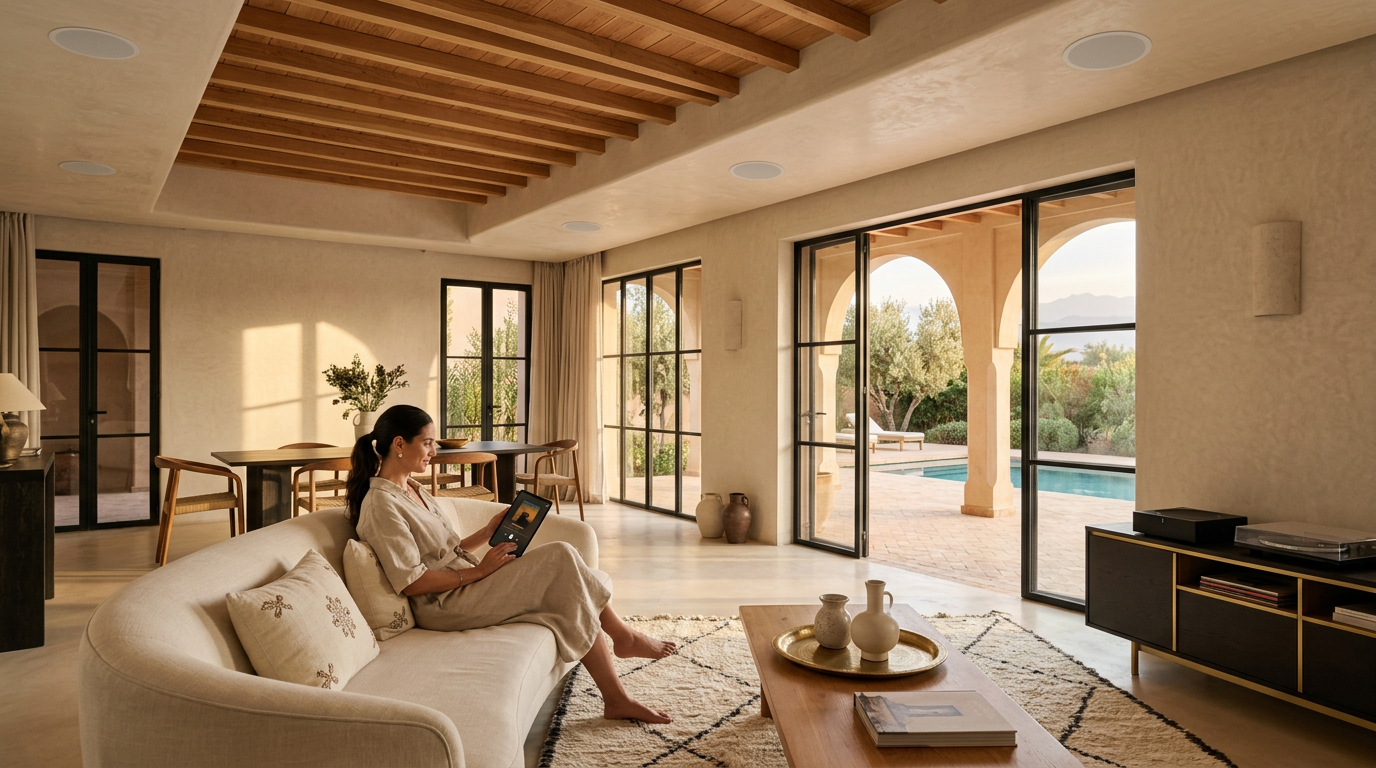
- Audio multiroom — Sonos (SonosNet/Wi-Fi), WiiM (Wi-Fi), Elipson (AirPlay/Chromecast). Each brand has its app and protocol.
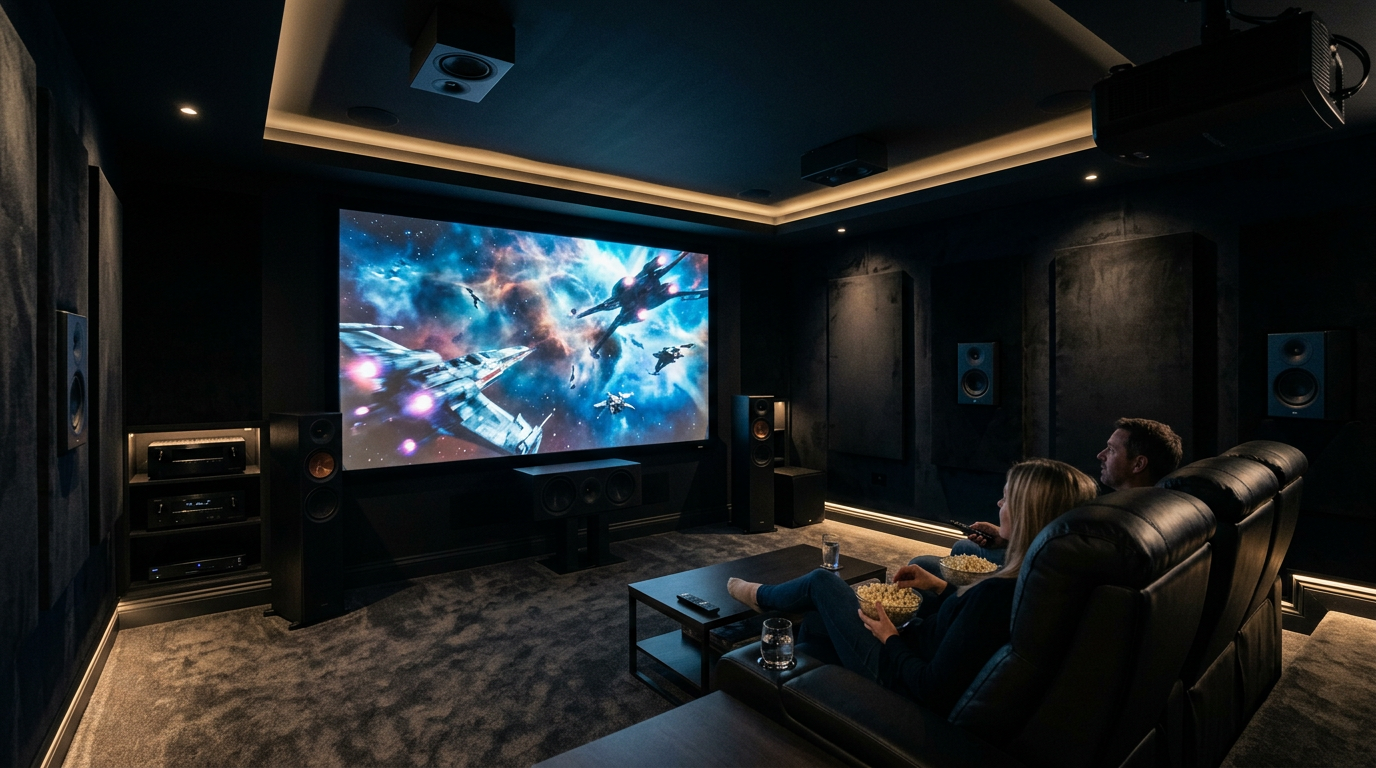
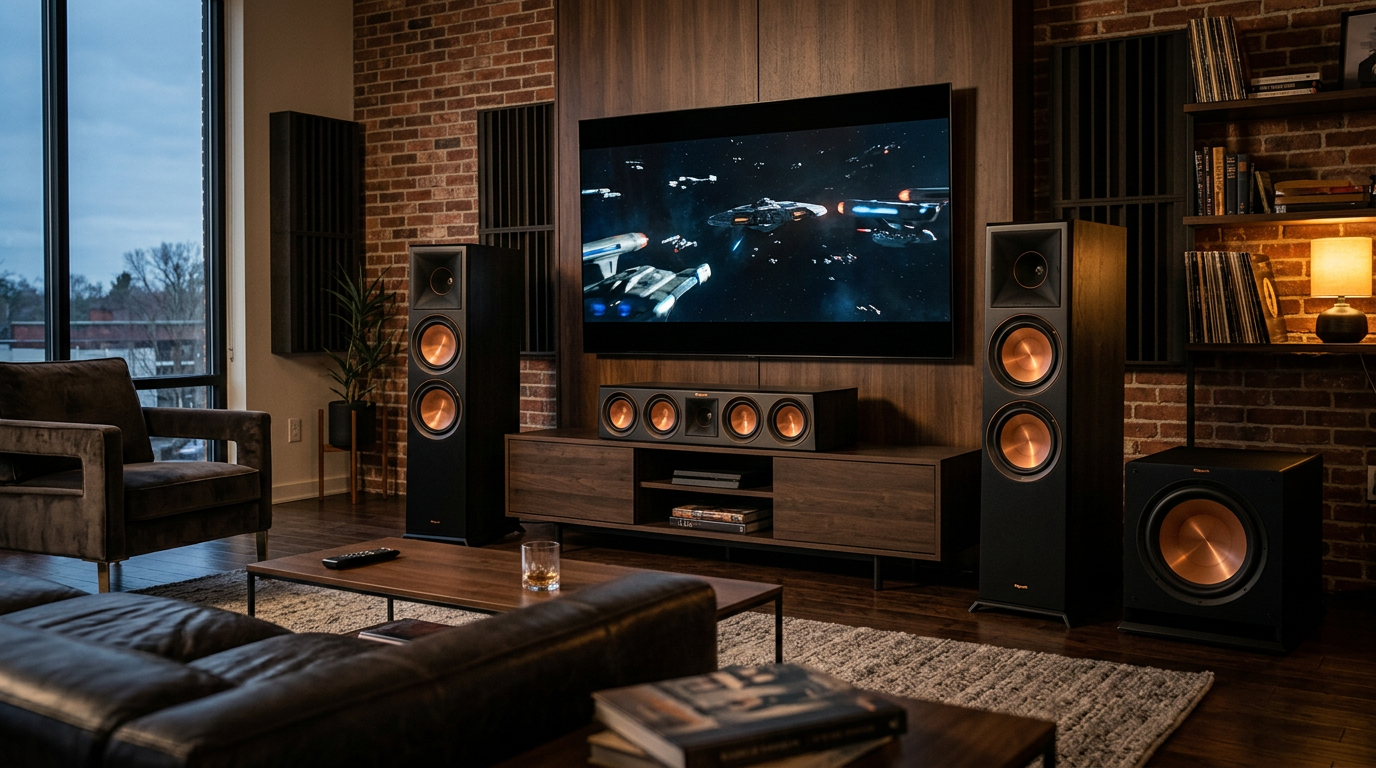
- Video / home cinema — TV, soundbar, Horion interactive screens. Connected via HDMI-ARC or eARC, controlled by IR remote or CEC.
- Home automation — Lighting, shutters, HVAC via KNX bus (Interra, HDL) or proprietary system (Crestron, Loxone). Controlled via ETS, touch screen or dedicated app.
Result: the client ends up with 3 different apps, no cross-cutting automation, and the impression that their "smart home" is actually three dumb houses side by side.
The solution: an IP server as conductor
The key to integration lies in the IP protocol. All modern systems — Sonos, WiiM, Horion, Loxone — communicate via the house's Ethernet/Wi-Fi network. The home automation server just has to send them HTTP commands to control them.
The Loxone Miniserver as central point
The Loxone Miniserver is ideal for this role because it combines:
- Native IP server — Sends HTTP/API requests to Sonos, WiiM and any IP device.
- Native KNX interface — Communicates directly with existing KNX actuators and switches (Interra, HDL).
- 8 inputs/outputs — Connects buttons, sensors and relays directly without additional module.
- Single app — The Loxone app becomes the single interface for everything: lights, shutters, audio, video, HVAC.
No need for a separate KNX/IP router, no need for a third-party supervision server, no need for a dedicated audio hub. One single enclosure in the electrical panel does it all.
Typical architecture: 250 m² villa in Morocco
Here is the architecture we recommend for a complete villa:
Home automation layer (KNX + Loxone)
- Loxone Miniserver (12,000 MAD) — Central brain, IP server + KNX.
- Relay Extension (×2) — 28 lighting and shutter circuits.
- Touch Pure (×15) — Touch switches in each room, Tree bus.
- Interra 8ch Actuator — If existing KNX actuators are already installed, the Miniserver controls them via its KNX port.
Audio layer (Sonos / WiiM / Elipson)
- Living room — Sonos Arc Ultra + Sub 4 + 2× Era 300 (5.1.2 Atmos home cinema).
- Kitchen — Sonos Era 100 (standalone, AirPlay 2).
- Bedrooms — WiiM Amp + Elipson IC8 in-wall (discreet in-ceiling).
- Terrace — Sonos Move 2 (portable, battery, IP65).
All these devices are on the same IP network as the Miniserver. The latter controls them via API without any additional wiring.
Video layer
- Living room — TV + Sonos Arc Ultra (HDMI-ARC). The Miniserver triggers the "Cinema" scene: turn off lights, close blinds, activate Arc Ultra on HDMI input.
- Office / meeting room — Horion M6A 75" (interactive screen). The Miniserver turns on the screen and launches conference mode on room entry.
Cross-cutting scenes: where the magic happens
The interest of centralized integration is creating cross-cutting scenes that coordinate audio, video and home automation in a single gesture:
"Good morning" scene
Trigger: 7:00 on weekdays (schedule) or first motion detected.
- Bedroom shutters open progressively (10% → 50% → 100% over 5 minutes)
- Corridor and kitchen lighting at 40%
- Kitchen Sonos Era 100: launches radio or "Morning" playlist at 15% volume
- Heating/cooling: switch to "Comfort" mode in occupied zones
"Cinema" scene
Trigger: press on the living room Touch Pure ("Cinema" zone).
- Living room lighting → off (3-second fade)
- Motorized blind → full down
- Sonos Arc Ultra → switch to HDMI-ARC input, volume 35%
- Indirect lighting (LED strip) → dimmed ambiance at 10%
"Departure" scene
Trigger: long press on entrance Touch Pure, or "Departure" button in Loxone app.
- All lighting → off
- All shutters → closed
- All Sonos/WiiM speakers → pause
- HVAC → "Away" mode (economy)
- Alarm → armed
"Party" scene
Trigger: button in Loxone app.
- Living room + terrace lighting → colored ambiance (LED RGBW if installed)
- All Sonos grouped in "Party" mode → same playlist in living room, kitchen, terrace
- Synchronized volume at 60%
- Terrace shutters → open
Protocols and bridges: how it communicates
Here is the communication scheme between the different systems:
- Loxone ↔ KNX: Miniserver's native KNX port (wired bus, TP1). No gateway needed.
- Loxone ↔ Sonos: HTTP API on local IP network. The Miniserver sends REST commands to Sonos.
- Loxone ↔ WiiM / Elipson: HTTP API (same principle). WiiM and Elipson amps expose control endpoints.
- Loxone ↔ HDMI: CEC commands via IR blaster or RS-232 module for non-IP TVs.
- Loxone ↔ Tree: Loxone Tree bus (bidirectional wired) via the Tree Extension. For Touch Pure switches and sensors.
Result: one Ethernet network, one server (the Miniserver), one KNX/Tree bus cable, and everything communicates.
Mistakes to avoid
- Not planning enough Ethernet outlets. Each audio zone (Sonos Amp, WiiM Amp) and each Horion screen needs an Ethernet cable. Plan at least 2 outlets per main room + 1 at the panel for the Miniserver.
- Mixing Wi-Fi and wired for audio. Sonos standalone speakers (Era 100, Era 300) work on Wi-Fi, but amplifiers (Sonos Amp, WiiM Amp) should always be wired in Ethernet for reliability.
- Forgetting the network. A manageable switch (Ubiquiti, Netgear Pro) with separate VLANs for home automation and audio is strongly recommended. This isolates KNX/IP traffic from Internet traffic and improves stability.
Where to start?
Smart Living performs the complete technical study of your project: audit of audio/video/home automation needs, IP architecture design, product selection and detailed quote. Whether you start from scratch or have an existing KNX installation to enrich, we find the right solution.